

Breaking the Efficiency Barrier in Life Sciences: How Cloud-Clone Redefines Research with a Tiny Bead
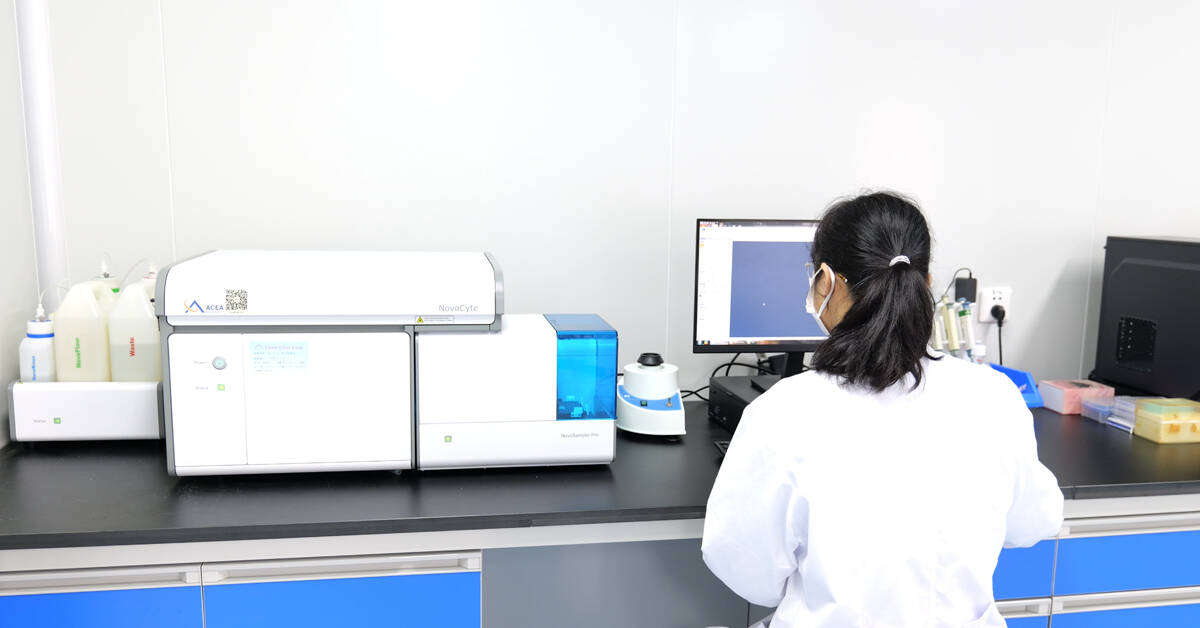
Fig 1 Operating on Flow Cytometric Multiplex Assay
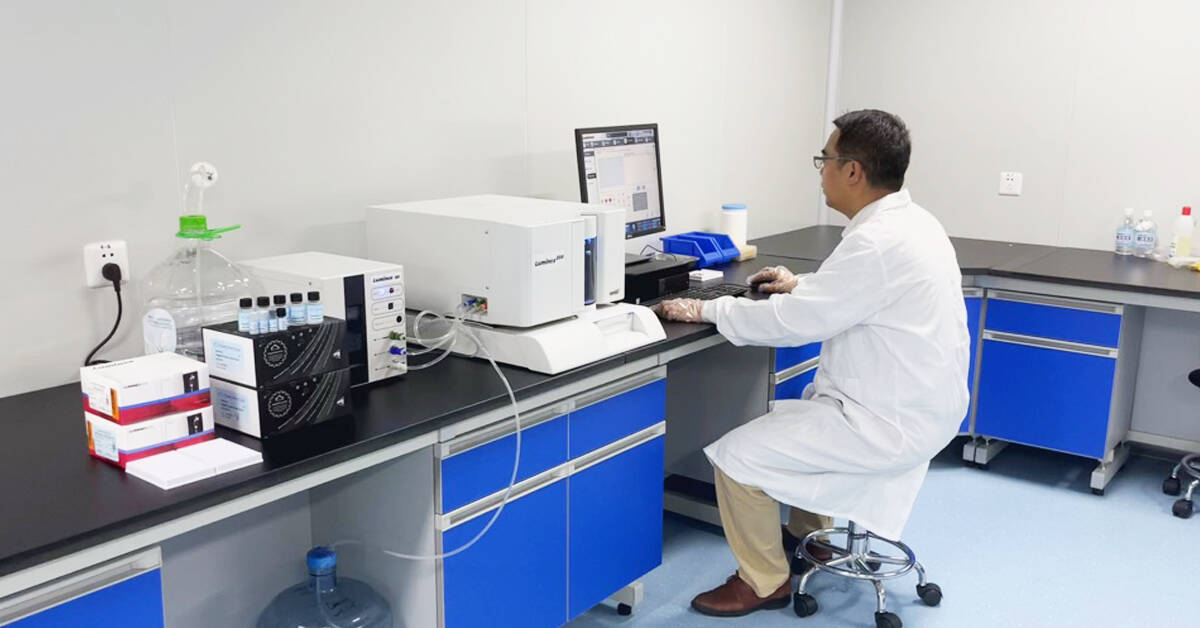
Fig 2 Operating on Luminex Multiplex Assay
As an original manufacturer, Cloud-Clone redefines lab efficiency with high-sensitivity multiplex kits, offering a cost-effective alternative for global labs
WUHAN, HUBEI PROVINCE, CHINA, February 6, 2026 /EINPresswire.com/ -- Cloud-Clone Corp. Breaks the Life Science Efficiency Barrier with High-Throughput Multiplex Assay Innovation
Biotech innovator Cloud-Clone Corp. has officially launched its high-sensitivity, flow cytometry-based multiplex immunoassay technology, designed to revolutionize how researchers analyze precious samples. By leveraging proprietary magnetic bead technology and a library of over 7,000 in-house validated antibody pairs,
Cloud-Clone enables the simultaneous detection of dozens of biomarkers in just two hours—down from the traditional three-day window. This breakthrough significantly reduces sample consumption by over 50% while maintaining picogram-level sensitivity, providing global researchers with a cost-effective, high-performance alternative to traditional ELISA and foreign-monopolized multiplex platforms.
In the lab, researchers often grapple with a precious tube of blood sample. To analyze more than a dozen key biomarkers within it, they would traditionally have to split the sample into numerous aliquots, running a separate, time-consuming experiment for each target. This process is not only labor-intensive but also frequently leaves them with insufficient sample volume.
Today, that paradigm has been shattered. Now, a single sample, one experiment, and about two hours are all it takes to generate results for more than a dozen targets simultaneously. Driving this transformation is Cloud-Clone Corp., a Chinese biotech firm that has solved a persistent efficiency problem in the research community using magnetic beads with a diameter even smaller than that of a a human hair.
The Slow-Paced Work That Hinders Scientific Research
Several years ago, Cloud-Clone’s R&D team identified a widespread bottleneck. In many life science labs, detecting dozens of disease-related indicators in a single sample required sequential testing—one indicator at a time, with instrument cleaning in between. This process usually took 1 to 3 days, consume at least 50 microliter of sample per test, and introduce variability through repetitive handling. For rare samples, like blood from cardiovascular disease patients, researchers may be limited to testing just a few indicators, severely constraining the scope of their work.
Fig 1 Operating on Flow Cytometric Multiplex Assay
A New Path: The Key to “High-Throughput” Detection
In late 2021, Cloud-Clone’s R&D team, led by Research VP Zhang Xiubo, focused on flow cytometry-based multiplex immunoassay, a technology enabling simultaneous detection of multiple targets but was historically dominated by very few companies, often accompanied by high costs and limited target options.
The team’s breakthrough centered on the core carrier: microscopic magnetic beads pre-coated with antibody "precision grippers". Leveraging its decades of expertise in research reagents, Cloud-Clone built a proprietary library of over 7,000 validated antibody pairs, all independently R&D and manufactured in-house. This "locksmithing" advantage ensures stable raw material supply, cost control, and rapid response to custom research needs, each antibody pair acts as a "key" for a specific detection target.
Fig 2 Operating on Luminex Multiplex Assay
Creating a Synergistic System: 1+1>2
The final challenge was calibrating the bead-antibody system for optimal performance, a process that demanded months of meticulous optimization:
Antibody immobilization density on beads was optimized to avoid signal interference (over-dense) or low capture efficiency (under-dense).
Reaction conditions were tightly controlled to ensure robust and reproducible results.
The completed system allows different beads, each targeting a unique indicator, to be mixed and used in a single assay.
Powered by Cloud-Clone’s high-sensitivity antibody pairs, the system can detects target substances at the picogram (pg) level—even at extremely low concentrations in low-volume samples.
Market-Validated Reliability & Efficiency
Post-launch, Cloud-Clone’s multiplex immunoassay kits underwent rigorous head-to-head testing against traditional ELISA kits and other global brands’ products, demonstrating superior consistency and reliability. Key performance gains for researchers:
Dramatic time saving: 10+ indicator tests condensed from 3 days to 2 hours
Sample saving: at least 50% less sample consumption vs. traditional methods
Wide applicability: Adopted in hundreds of labs worldwide for research in oncology, cardiology, immunology, and infectious disease.
Fig 3 Standard curve for Multiplex Assay
A Chinese Force Reshaping the Global Research Tool Landscape
Cloud-Clone’s international success is built on a dual strategy:
Core innovation: Mastering the independent R&D and production of critical biological raw materials (antibody pairs).
Global Standards: Adhering to stringent international production and quality management systems, ensuring worldwide consistency and reliability.
This approach delivers world-class research tools at an accessible cost for global researchers, breaking the foreign monopoly in high-end multiplex detection.
Today, Cloud-Clone’s multiplex assay kits are a powerful tool in life science labs worldwide, accelerating discoveries by solving a critical efficiency problem. The tiny bead’s trajectory reflects China’s biotech innovation logic: focus on authentic research needs, and deliver market-validated value. For global researchers, it means more accessible, efficient, and cost-effective powerful tools to drive the next generation of breakthroughs for human health.
Goya Guo
Cloud-Clone Corp
+86 139 8611 6348
email us here
Legal Disclaimer:
EIN Presswire provides this news content "as is" without warranty of any kind. We do not accept any responsibility or liability for the accuracy, content, images, videos, licenses, completeness, legality, or reliability of the information contained in this article. If you have any complaints or copyright issues related to this article, kindly contact the author above.
